

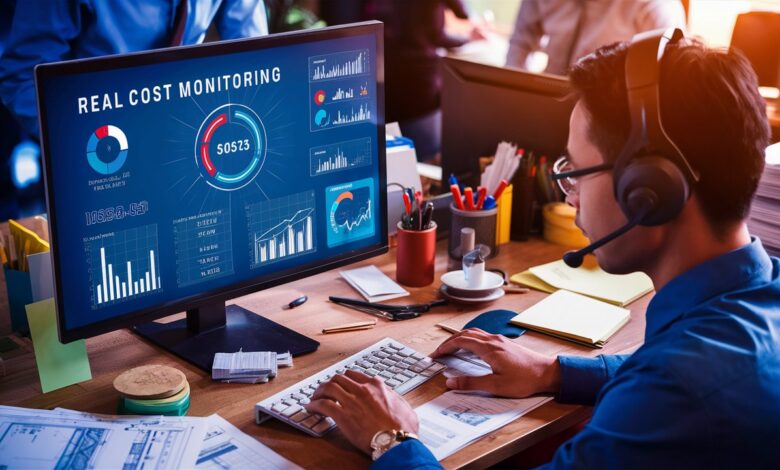
For every project to be successful and profitable, cost monitoring and control are essential. By methodically monitoring, assessing, and disseminating a project’s financial position across its entire lifecycle, project cost tracking systems are crucial instruments that make this process easier. By putting these processes in place, project managers can improve accountability and transparency among stakeholders by making well-informed choices and time tracking adjustments instantly [1].
Comparing Real-Time and Conventional Cost Tracking
Earlier, cost control in a project required periodic review of the financial information, which frequently resulted in delays in detection of the financial discrepancies or cost overruns. The traditional response mechanism can render it more difficult for a project to adjust to unfolding situations, which could lead to a higher cost and lower profit. Real-time cost monitoring, however, uses sophisticated project management software to deliver current financial performance information. By using this proactive approach, project managers can keep an eye on costs as they arise, allowing for prompt interventions and modifications to maintain the project’s progress [3][10].
Cost tracking’s significance for profitability and project management
It is impossible to exaggerate the importance of expense tracking in project management. It has a significant part in:
Management of the Budget: Project managers can protect project margins by keeping a close eye on spending to make sure that costs stay within the allocated budget [5].
Cost Estimation: Precise monitoring aids in the improvement of future cost projections, which results in more accurate budgeting for projects that follow [5].
Risk Mitigation: By providing regular financial status reports, teams can identify possible problems early on and take action before they become more serious [2]. [6].
Communication with Stakeholders: Regular reporting on financial developments informs stakeholders, encouraging cooperation and confidence [2].
The Value of Monitoring Costs in Real Time
In order for a project to be both profitable and successful, the ability to monitor and control costs in real-time is paramount. Project managers and company leaders can often make informed decisions very quickly through real-time cost tracking solutions that give them visibility into project expenditures instantaneously. Below are the major benefits of using a real-time cost tracking solution:
Ability to Make Timely and Informed Decisions: Project managers are able to address financial situations as they become apparent if good data is available in real-time. The agility to make decisions is critical to project success and allows project managers to make changes to project planning, allocate resources, or activate cost-saving strategies in a timely manner [1]. [9] Impact on Project Forecasting and Budgeting: Real-time cost tracking provides more accurate forecasting and budgeting. Managers can take comparative results of estimated costs against actual costs during the project and improve their financial forecasting for future projects, along with more effective financial management and resource planning [7] [11]
Improvement of Stakeholder Trust and Communication: Financial tracking helps promote better communication with stakeholders, including leaders, clients and teams. Stakeholders build trust in the project management process of using real-time financial data because they see their projects being managed efficiently and cost effectively [3]. [11].
Conclusion
The significance of real-time expense-tracking is incalculable. It is critical to ensuring project profitability since it enables project managers to monitor costs as they are incurred, and not from a posterior perspective. The aggressive approach helps teams detect cost overruns in good time and make the necessary interventions that save costs and time. By having an up-to-date overall view of financial data, organizations are able to make more informed decisions that reflect their strategic objectives, which can result in enhanced project outcomes and profitability.