
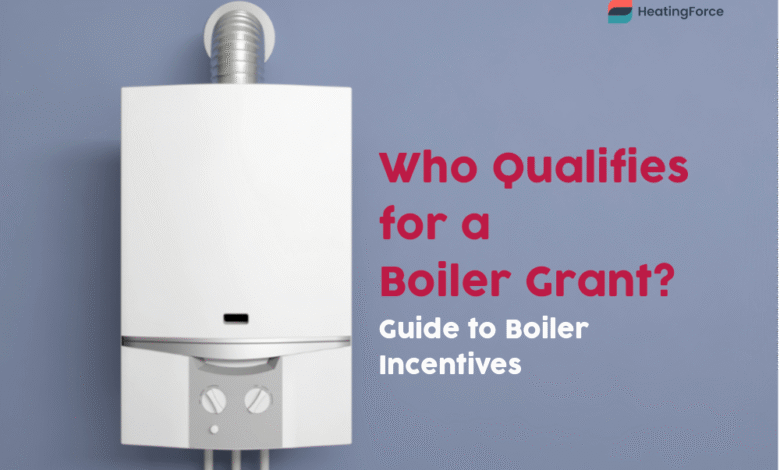
Let me cut to the chase: If you’re expecting a free gas boiler replacement in 2025, you are five years too late.
The government killed off traditional boiler grants. They’re done, finished. What replaced them? Heat pumps and a scheme that actually makes sense, if you know how to work it.
Here’s what changed, who qualifies, and why you need to move faster than you think.
The Gas Boiler Grant Is Dead, Here’s What Replaced It
Replacing gas boilers? Forget it. The government diverted every pound to low-carbon heating. Why? Because of net-zero commitments by 2050 and decarbonised heating by 2035.
Translation: they’re forcing your hand towards heat pumps.
The Boiler Upgrade Scheme – BUS – now offers £7,500 for air source heat pumps and ground source heat pumps; biomass boilers get £5,000, but only in rural off-gas areas. That’s it. No gas. No oil. No LPG replacements.
Current BUS Grant Values (2025)
| Heating System | Grant Amount | Eligibility |
| Air Source Heat Pump | £7,500 | All eligible homes |
| Ground Source Heat Pump | £7,500 | All eligible homes |
| Biomass Boiler | £5,000 | Rural off-gas only |
Think heat pumps are expensive? They were. But removing the mandatory insulation requirement in 2025 cut average project costs by £2,500. That’s substantial.
ECO4: The Scheme That Actually Matters for Most Homeowners
Here’s where it gets interesting. The Energy Company Obligation (ECO4) expanded massively in 2025. And I mean massively.
The income threshold jumped from £28,000 to £31,000 annually. Sounds boring until you realise that it brought 1.2 million additional households into eligibility. Just like that.
But here’s the real game-changer: D-rated properties now qualify.
Previously, only E, F, and G-rated homes were eligible. Now? The 8.5 million UK homes with D ratings can access grants to improve to C or B. That’s a tenfold expansion in eligible properties.
Who Qualifies for ECO4 in 2025?
The tiered structure is simple:
- Single person: £20,000 income threshold
- Couples: £28,000 threshold
- Families with children: £31,000 threshold
Receiving benefits? You’re automatically in. Pension Credit, Universal Credit, Income Support, Jobseeker’s Allowance, and Employment Support Allowance all qualify. They also added Child Benefit, Working Tax Credit, and Housing Benefit recipients who were previously excluded.
What Does ECO4 Actually Cover?
ECO4 isn’t just about boilers. It’s a whole-house approach. Your property must jump two EPC bands, so an F-rated home reaches D minimum, while D-rated homes must hit C or B.
Grant amounts? Typically £10,000 for comprehensive upgrades in low-income households. The exact amount depends on the property location and required measures. Boiler replacement happens as part of this package, not standalone.
ECO4 vs BUS: Quick Comparison
| Feature | ECO4 | BUS |
| Income requirement | Yes (tiered) | No |
| Grant amount | Up to £10,000 | Fixed £7,500/£5,000 |
| EPC improvement | Must jump 2 bands | Not required |
| Covers gas boilers | Yes (as part of package) | No |
| Deadline | March 31, 2026 | Runs to 2028 |
The March 2026 Deadline Nobody’s Taking Seriously Enough
ECO4 ends March 31, 2026. That’s four months away from now.
Will they extend it into ECO5? Probably. There’s strong parliamentary support. But it’s not confirmed. And “probably” doesn’t pay for your heating upgrade if the scheme closes before you apply.
Applications submitted in early 2026 face a genuine risk. Installation capacity has grown, more accredited installers have joined the scheme, but processing and installation take time. Waiting until February 2026? You’re gambling.
BUS runs until 2028 with £295 million confirmed funding for 2025/2026. That’s secure. ECO4? Less so.
The Digital Revolution You Didn’t Hear About
ECO4’s administrative overhaul in 2025 eliminated the nightmare that was paper-based applications.
Previous processing times? Six to eight weeks. Current times? Under 15 minutes for the entire online process.
Automated eligibility verification connects directly to government databases. Instant document validation. Real-time application tracking through a secure portal. You upload benefit letters, payslips, and EPC certificates, done.
Want to know if this matters? It does. Faster processing means more installations before the deadline. Simple.
What BUS Actually Covers (And What It Doesn’t)
BUS is straightforward. You need to replace a fossil fuel heating system (gas, oil, LPG, electric) with a heat pump or an eligible biomass boiler.
The grant covers:
- Heat pump units
- Associated pipework
- Cylinders
- Installation labor
What’s not covered:
- Insulation upgrades
- Radiator replacements
- Electrical work beyond the heating system
- Solar thermal installations
- Hybrid systems with gas backup
Can you combine the BUS with other public funding? No. ECO4, renewable heat incentives, none can stack with BUS. Private financing or green home loans? Those work.
The Installer-Led Reality
Neither scheme requires you to apply directly to the government. Thank god.
ECO4 works through accredited energy suppliers and installers who handle applications for you. BUS operates through MCS-certified installers who apply to Ofgem after surveying your property.
This means your primary decision is choosing a reputable, accredited installer. They navigate the bureaucracy. You just need to verify they’re legitimate.
Who’s Actually Excluded?
Social housing and local authority properties can’t access either scheme. Large commercial buildings? Also out.
Private landlords, owner-occupiers, small businesses, and self-built homes remain eligible. Private tenants need landlord permission for ECO4.
Properties must have a valid EPC rating. No EPC? Get one before applying. It takes about an hour and costs £60–£120.
What’s Coming Next (Unconfirmed)
Spring 2025 consultations explored expanding BUS to include air-to-air heat pumps and electric heat batteries. Neither is currently eligible.
March 2025 saw 4,028 BUS applications, an 88% year-on-year increase. Demand is rising. But as of November 2025, no confirmed expansions exist.
Treasury pressure to lower energy bills could redirect green levy funding. Translation: schemes might shrink or change eligibility in future years. But commitments through 2026 for ECO4 and 2028 for BUS are legally binding.
The Bottom Line
The traditional Free Boiler Scheme is no longer active. ECO4 is your play if you’re low to moderate income with an E, F, or G-rated property. Income thresholds and benefit criteria are substantially more inclusive than in previous years.
BUS works for anyone willing to install a heat pump, regardless of income. $7,500 off upfront costs makes heat pumps competitive with gas boiler replacements when you factor in long-term running costs.