
The Best Test Management Tools for Agile Teams: Features Comparison and Reviews

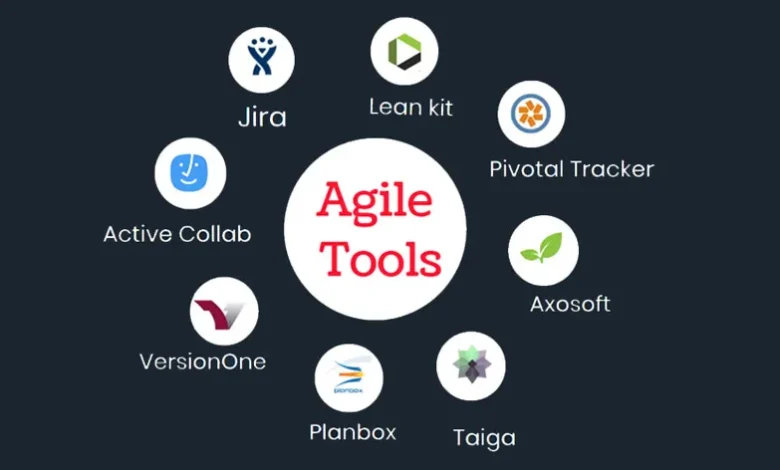
As Agile development accelerates, teams require tools that support fast, coordinated testing across short sprints. The best test management tools help Agile teams plan, execute, and monitor testing efficiently while maintaining traceability with user stories, requirements, and defects. These tools enable real-time collaboration, automated test execution, and integration with popular CI/CD and Agile project management platforms (Jira, Azure DevOps, Jenkins), ensuring faster feedback and better sprint outcomes.
Key Features to Look for in an Agile Test Management Tool
Agile teams that are evaluating test management systems will likely prioritize the features that best support iteration, collaboration, continuous feedback, and integration with automation tools. When deciding on a test-management tool to use in Agile processes, you may want to consider the following:
- Seamless Integration with Agile Tools: The tool should seamlessly integrate with the Agile project management tool or system that your organization is already using so that you can integrate all user stories, test cases, and defects.
- Real-Time Collaboration: Real-time collaboration with members of a team, developers, testers, and end-users by means of real-time communication should enable rapid and simple cooperation. Real-time updates, comment threads, and dashboards.
- Support for Continuous Testing and CI/CD Pipelines: Primarily employing CI/CD tools for automated testing at build and deployment, the tool should be implemented in accordance with DevOps best practices.
- Customizable Dashboards and Reporting: Immediate metrics are needed in agile teams. Improved decision-making requires a strong dashboard that shows the graphic indicators of development during sprints, defect density, and test coverage.
- Integration with Automation Framework: This will involve support for the most popular test automation frameworks and tools, Selenium, Cypress, and Playwright, while adopting a hybrid manual and automation testing strategy.
- User-Friendly Interface: With an intuitive interface, an Agile team will be able to set up, modify, and run tests in record time, while needing very little knowledge and training.
Benefits of Using Test Management Tools in Agile Projects
Teams in Agile projects create software progressively in sprints. While feedback is constantly being provided, there must be alignment of development and testing. Test management tools introduce users to visibility and collaboration in a high-speed environment. In addition to increasing test coverage, test management solutions can help teams achieve earlier deliveries and manage quality while adjusting for new priorities.
- Enhanced Collaboration and Transparency: One working area for a user, tester, and developer to watch real-time development is provided by test management software; it supports sprint goals.
- Centralised Test Repository: All test data, test cases, and test results, therefore streamlining management in one place, communication, and monitoring of testing activity throughout sprints.
- Improved Traceability: Connecting user stories, requirements, and faults to test cases will give teams assurance that their test set is complete. They have little trouble spotting overlooked or missing items.
- Real-Time Reporting and Analytics: These dashboards assist in revealing visual insights into measures, including defect density, test performance, and sprint flow, therefore forming part of the toolkit available. Teams’ actions are informed by relevant data.
- Automation Integration Support: Test management systems should promote continuous testing and rapid feedback via integrations into automation platforms and CI/CD pipelines.
- Faster Defect Identification and Resolution: Reasonable defect detection and fixing reduce rework due to centralized logging and real-time updates. The defects can be found and fixed earlier within the same sprint cycle.
Top Test Management Tools for Agile Teams
When teams following agile methodologies look for the right infrastructure for improved test efficiency, the right tool for test management can make a significant impact. Aside from the most widely used tools, there are a lot more worth exploring that offer test case management, traceability, sprint alignment, and DevOps pipeline integration.
- LambdaTest:LambdaTest is a cloud testing platform that allows you to perform manual and automated tests at scale across 3000+ browser and OS combinations. The platform also offers an AI-native Test Manager tool, enabling Agile teams to manage manual exploratory testing and automation runs in one place, with real-time reporting, parallel test execution, and integrations with Jira, GitHub, and Slack.
- QMetry Test Management:A scalable solution for Agile and DevOps teams, QMetry provides a unified platform to manage test cases, test suites, cycles, and traceability to requirements, defects, and releases. It integrates with CI/CD and automation frameworks and offers dashboards, metrics, and analytics for coverage, flaky tests, and QA health.
- TestRail:TestRail helps teams plan, organize, manage, and track testing efficiently. It supports test runs, suites, dashboards, reports, and integration with bug tracking and automation tools. In Agile workflows, it enables sprint-based tracking, linking tests to user stories, and observing regression testing.
- PractiTest:Designed for Agile-first teams, PractiTest supports frequent releases and continuous delivery. It offers test case management, dashboards, workflow configuration, and robust traceability from requirements to tests to defects, suitable for dynamic Agile environments.
- AgileTest:Built inside Jira, AgileTest allows test script creation, execution, tracking, and reporting within the Jira ecosystem. It supports exploratory checklists, dashboards, and custom workflows, reducing context switching and aligning QA with development in sprint-based workflows.
Conclusion
In conclusion, effective test management in agile teams helps to keep the quality and speed of the delivery cycle. The right test management tool helps QA teams to work effectively, observe changes in real time, and accurately validate every user story in every sprint. Such tools offer end-to-end visibility and traceability and ensure that testing is goal-oriented for users so that Agile teams can quickly address changing circumstances.
All while enabling faster feedback cycles and better decisions, since they provide an all-in-one environment to perform manual, automation testing, and exploratory testing. In other words, today’s test management tools make Agile teams capable of releasing rapid, high-quality software while enabling better collaboration, productivity, and maintenance of project success.