

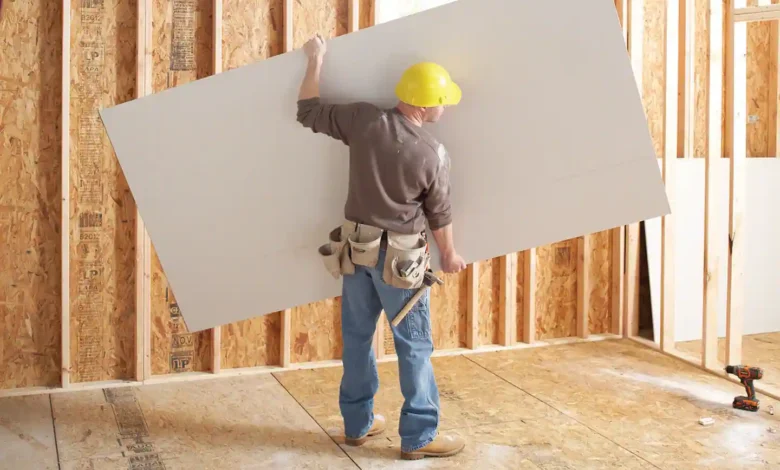
What Is Plasterboard?
Plasterboard, also known as drywall, gypsum board, wallboard, or Sheetrock, is a widely used construction material for creating interior walls, ceilings, and partitions. It consists of a gypsum plaster core (calcium sulfate dihydrate) sandwiched between durable paper or fiberglass liners.
Because of its lightweight structure, smooth finish, and fast installation, plaster board has become the standard choice for modern residential and commercial buildings worldwide.
Key Features and Benefits of Plasterboard
Plasterboard offers multiple advantages that make it a preferred building solution:
-
Fire resistance due to gypsum’s natural water content
-
Soundproofing capabilities, especially with acoustic boards
-
Fast and easy installation compared to traditional plaster
-
Cost-effective and widely available
-
Smooth, paint-ready surface
-
Recyclable and environmentally friendly
These benefits make plasterboard ideal for both new construction and renovations.
Common Uses of Plasterboard
Plasterboard is extremely versatile and is used in many interior applications:
-
Interior walls and ceilings
-
Partition walls in homes and offices
-
Fire-rated walls and ceilings
-
Bathroom and kitchen walls (with moisture-resistant boards)
-
Overboarding old or damaged walls
-
Commercial fit-outs and residential projects
Its adaptability allows builders to meet fire, moisture, and acoustic requirements efficiently.
Types of Plasterboard Explained
There are several types of plasterboard, each designed for specific conditions:
-
Standard Plasterboard (GP) – General-purpose use
-
Moisture-Resistant Plaster board (MR) – Green-faced boards for bathrooms and kitchens
-
Fire-Resistant Plaster board (FR) – Contains fiberglass for enhanced fire protection
-
Acoustic Plaster board – Denser boards for sound insulation
-
Insulated Plaster board – Combined with thermal insulation
-
Impact-Resistant Plaster board – For high-traffic areas
Choosing the right type ensures safety, durability, and performance.
How to Install Plasterboard (Basic Steps)
Installing plasterboard is straightforward, even for beginners:
-
Measure and Cut – Score the board and snap it cleanly
-
Fix to Studs – Attach to timber or metal studs using drywall screws
-
Tape Joints – Apply joint tape over seams
-
Apply Joint Compound – Cover seams and screw heads
-
Sand Smooth – Once dry, sand for a flawless finish
-
Decorate – Ready for priming, painting, or wallpapering
Proper installation ensures a professional, long-lasting finish.
Plasterboard vs Traditional Plaster
Compared to traditional wet plaster, plaster board offers major advantages:
| Feature | Plasterboard | Traditional Plaster |
|---|---|---|
| Installation | Fast & clean | Slow & labor-intensive |
| Cost | Lower | Higher |
| Drying Time | Immediate | Days to weeks |
| Repairs | Easy | Complex |
| Finish | Smooth | Smooth (with skill) |
This is why plaster board dominates modern construction.
Conclusion
Plasterboard is an essential building material that combines speed, affordability, fire resistance, and versatility. With multiple types available for moisture, fire, sound, and insulation control, it suits nearly every interior application. Whether you’re building, renovating, or repairing, plaster board provides a reliable, efficient, and professional solution for walls and ceilings.