
EFFive Tornado: The Most Powerful Tornado Rating in the United States (2026 Guide)

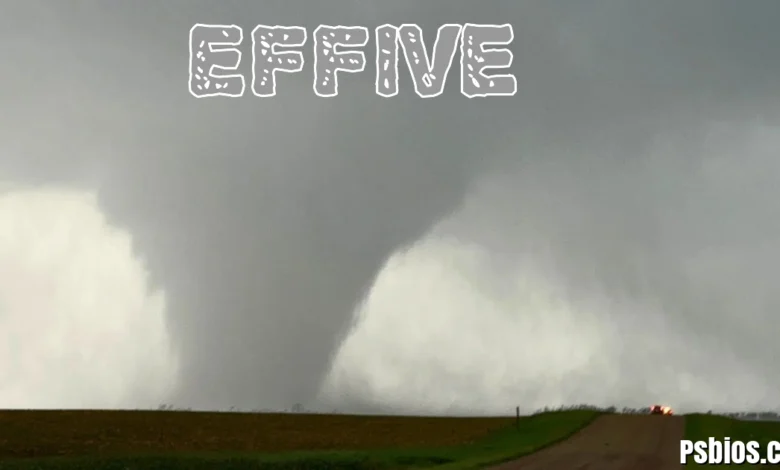
Tornadoes are among the most destructive weather events on Earth, but EFFive tornadoes represent the absolute extreme of tornado intensity. Within the United States, tornado strength is classified using the Enhanced Fujita (EF) Scale, a scientific system used by the National Weather Service (NWS) to estimate wind speeds based on the damage left behind.
An EF5 tornado is the highest rating possible on this scale and is associated with winds exceeding 200 mph (322 km/h). These storms can produce catastrophic and often unimaginable destruction, including well-built homes swept completely from their foundations, vehicles thrown long distances, and landscapes stripped bare.
Although EFFive tornadoes make up less than 1% of all tornadoes, they account for a significant portion of tornado-related fatalities and property damage. Most occur in the central United States, particularly in areas known as Tornado Alley, where atmospheric conditions frequently produce powerful supercell storms.
This comprehensive 2026 guide explains what an EFFive tornado is, how the rating system works, historical events, and how the United States monitors these rare but devastating storms.
What Is an EFFive Tornado? Definition and Key Characteristics
An EFFive tornado is the most severe classification on the Enhanced Fujita Scale, indicating tornadoes capable of producing incredible levels of destruction.
Wind Speed and Damage Level
EF5 tornadoes are associated with estimated wind speeds of:
-
Over 200 mph (322 km/h)
-
Some radar measurements suggest winds may exceed 300 mph
Because direct wind measurement is extremely difficult during a tornado, meteorologists determine the rating by analyzing the damage left behind.
Typical EF5 damage indicators include:
-
Well-anchored homes completely swept away
-
Vehicles thrown hundreds of yards or more
-
Large trees debarked or stripped of bark
-
Severe ground scouring where soil is removed
-
Industrial structures leveled
These effects represent the highest level of tornado damage recognized by meteorologists.
How Rare Are EFFive Tornadoes?
EFFive tornadoes are extremely rare. In the United States:
-
They represent less than 1% of all tornadoes
-
Only around 10 confirmed EF5 events have occurred since the EF scale began in 2007
Despite their rarity, their impact can be catastrophic when they strike populated areas.
Understanding the Enhanced Fujita Scale
The Enhanced Fujita Scale (EF Scale) is used in the United States to classify tornado intensity based on damage assessments.
Overview of the EF Scale
| Rating | Wind Speed | Damage Description |
|---|---|---|
| EF0 | 65–85 mph | Minor damage |
| EF1 | 86–110 mph | Moderate damage |
| EF2 | 111–135 mph | Considerable damage |
| EF3 | 136–165 mph | Severe damage |
| EF4 | 166–200 mph | Devastating damage |
| EF5 | Over 200 mph | Incredible destruction |
The EF scale was introduced to provide more accurate wind estimates and engineering-based damage analysis.
Damage Indicators Used for Ratings
Meteorologists examine 28 different damage indicators to determine tornado strength. These include:
-
Residential homes
-
Schools
-
Commercial buildings
-
Trees and vegetation
-
Transmission towers
-
Infrastructure
Each indicator has degrees of damage that help scientists estimate the tornado’s true wind speed.
History of the EFFive Scale in the United States
Before 2007, tornadoes were rated using the original Fujita Scale (F0–F5) created by meteorologist T. Theodore Fujita in 1971.
Why the EF Scale Was Introduced
Although the Fujita scale was groundbreaking, scientists later discovered that its wind estimates were sometimes inaccurate.
The Enhanced Fujita Scale was introduced on February 1, 2007 with several improvements:
-
More accurate engineering analysis
-
Expanded damage indicators
-
Refined wind speed estimates
Under the old system, the strongest tornadoes were labeled F5. After 2007, they became EFFive .
EFFive “Drought” in the United States
Between 2013 and 2025, the United States experienced a 12-year gap without an official EFFive tornado.
Researchers believe several factors contributed to this period:
-
Improved building codes
-
Changes in damage assessment methods
-
Fewer storms hitting heavily populated areas
The drought ended in June 2025 with the Enderlin, North Dakota EF5 tornado.
Notable EF5 Tornadoes in the United States
Since the adoption of the EF scale in 2007, several tornadoes have reached EF5 intensity.
| Date | Location | Fatalities | Key Impact |
|---|---|---|---|
| May 4, 2007 | Greensburg, Kansas | 12 | 95% of town destroyed |
| May 25, 2008 | Parkersburg, Iowa | 9 | Homes obliterated and debris scattered miles |
| April 27, 2011 | Hackleburg–Phil Campbell, Alabama | 71 | Entire neighborhoods swept away |
| April 27, 2011 | Smithville, Mississippi | 23 | Pavement torn from roads |
| May 22, 2011 | Joplin, Missouri | 158 | Deadliest US tornado since 1953 |
| May 20, 2013 | Moore, Oklahoma | 24 | Schools destroyed and neighborhoods flattened |
| June 20, 2025 | Enderlin, North Dakota | 3 | Train derailment and severe rural destruction |
The 2011 Super Outbreak
One of the most significant tornado outbreaks in US history occurred in April 2011, producing multiple EF5 tornadoes across the Southeast.
These storms caused:
-
Massive destruction across several states
Where EFFive Tornadoes Occur Most Often
Most EFFive tornadoes occur in the central United States, where atmospheric conditions favor severe storms.
Tornado Alley
Traditional Tornado Alley includes states such as:
-
Oklahoma
-
Kansas
-
Texas
-
Nebraska
These regions experience powerful storms because warm, moist air from the Gulf of Mexico collides with cooler, drier air from the Rocky Mountains and Canada.
This combination creates ideal conditions for supercell thunderstorms, the primary producers of strong tornadoes.
Shifting Tornado Patterns
Recent research suggests that tornado activity may be shifting eastward, affecting areas such as:
-
Tennessee
-
Mississippi
-
Alabama
-
Kentucky
This region is sometimes called “Dixie Alley.”
Population density in these areas increases the risk of higher casualties during major tornado events.
How the United States Detects and Warns About EFFive Tornadoes
Because EFFive tornadoes develop rapidly, early detection and warnings are critical.
Doppler Radar Technology
Meteorologists use Doppler radar to detect:
-
Rotating thunderstorms
-
Tornado signatures
-
Wind velocity changes
Radar systems operated by NOAA and the National Weather Service provide real-time storm monitoring.
Storm Prediction Center
The Storm Prediction Center (SPC) issues forecasts and watches when conditions are favorable for tornado development.
Tornado Watches vs Warnings
| Alert Type | Meaning |
|---|---|
| Tornado Watch | Conditions are favorable for tornado formation |
| Tornado Warning | A tornado has been spotted or detected by radar |
During a warning, residents should seek shelter immediately, ideally in a basement or interior room.
Conclusion: Why EFFive Tornadoes Are So Significant
EFFive tornadoes represent the most powerful and destructive storms on the planet. With wind speeds exceeding 200 mph, they can erase entire neighborhoods within minutes.
Even though they occur rarely, their impact is enormous. Historic storms like Joplin (2011) and Moore (2013) highlight the devastating potential of these extreme weather events.
In the United States, advances in meteorology, radar technology, and early warning systems have improved tornado detection and preparedness. However, because EF5 tornadoes develop from powerful supercell storms, they remain one of the most unpredictable and dangerous natural disasters.
Understanding how these storms form and how warnings work can help communities stay prepared and resilient during severe weather seasons.
FAQs About EFFive Tornadoes
How strong is an EFFive tornado?
An EFFive tornado has estimated wind speeds greater than 200 mph, capable of destroying reinforced buildings.
How rare are EF5 tornadoes?
They represent less than 1% of all tornadoes in the United States.
When was the most recent EF5 tornado?
The most recent confirmed EFFive occurred in June 2025 in Enderlin, North Dakota, ending a 12-year EF5 drought.
Where do most EF5 tornadoes occur?
They most commonly occur in Tornado Alley, including Oklahoma, Kansas, and Texas.
Can EF5 tornadoes be predicted?
Meteorologists can forecast conditions favorable for tornadoes, but exact EF5 formation cannot be predicted in advance.